
Interesting facts about Maasai Mara National Reserve
Interesting facts about Maasai Mara National Reserve : Maasai Mara National Reserve, usually referred to as Masai Mara and The Mara by locals, is one of Kenya’s major game reserves and is largely regarded as Africa’s best wildlife reserve. Maasai Mara National Reserve is 1,500-2,170 metres (4920-7120 feet) above sea level and covers 1,510 square kilometres (580 square miles). The Mara, which borders Serengeti plains, is home to an astounding variety of wildlife. The “big five” (lion, leopard, African elephant, cape buffalo, and black rhinoceros) and other well-known species including zebras, giraffes, hyenas, cheetahs, wildebeest, elands, and Thomson’s gazelles may all be found in the Mara Game Reserve, which is well-known across the globe for its abundance of wild creatures.
The word “Mara” means “spotted” in the native Maasai language of Maa, referring to the numerous trees that dot the landscape. It was chosen in homage to the Maasai people, who were the area’s original occupants. The Narok County Government oversees the reserve, and the Maasai population in the area has taken part in conservation efforts to stop poaching and other illicit activities.
- Incredible Wildlife.
Masai Mara National Reserve, which was first declared as a conservation area in 1961, is recognized as a year-round safari destination because it provides a more-or-less ideal climate with an abundance of species for fantastic game viewing all through the year. The Big Nine African animals the lion, leopard, elephant, Cape buffalo, and rhinoceros as well as the Big Five and more than 400 bird species have been identified in the Mara. Of these, about 60 species are raptors. To learn more about the wildlife and animals of the Masai Mara, plan a safari to where you will spot the endless wonders of nature in the reserve.
- The Great Migration of Wildebeest.
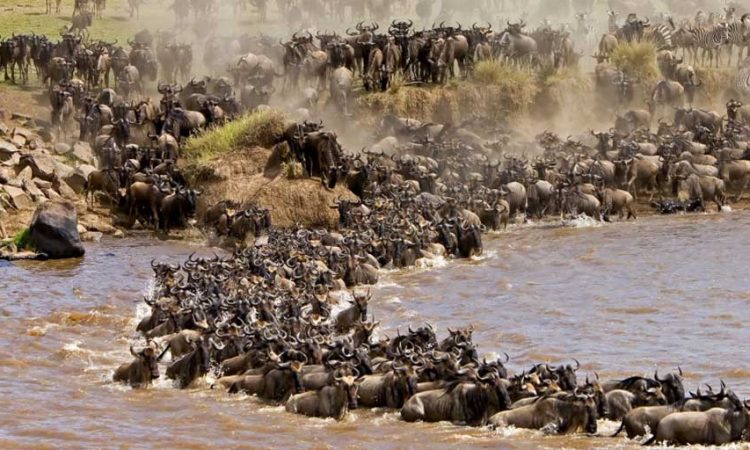
The Great Wildebeest Migration occurs every year between late July to October, however the exact time can vary slightly depending on the prevailing rainfall patterns. It has been named one of the seven natural wonders of the world. More than 1.5 million wildebeest, zebra, and antelopes migrate from the Serengeti northward into the Masai Mara during these months. They do so in search of food and water as well as to complete their reproductive and natal cycles.
- Lions.
Though Masai Mara is home to a variety of fascinating creatures, seeing a lion is frequently the highlight of a safari game drive, and the majority of visitors if not all have lions at the top of their list of wildlife to look out for when they visit the reserve. Including the conservancies that surround the core reserve, the number of lions (including lionesses) in the larger Masai Mara area is currently estimated to be between 800 and 900.
- The Maasai People.
The Maasai are a nomadic pastoralist tribe that historically relies on herding cattle for a living, making them arguably the most recognizable tribe in all of Africa. The Maasai are a Nilotic ethnic group that is said to have moved from the semi-arid Nile valley north of Lake Turkana millennia ago. They now live in the area surrounding Masai Mara and a sizable chunk of the Great Rift Valley. In addition to their traditional attire of red or vividly colored “shukas” or body wraps, the Maasai have a distinctive nomadic culture and way of life.
- Area & Location.
South West Kenya, which is a region of East Africa, is where the Masai Mara is situated. The Great Rift Valley almost vertically carves a significant portion of Kenya, and the Mara reserve is really located within the enormous valley formations. Masai Mara’s land size is approximately 1,510 km2 (580 square miles), and it shares a boundary with the Serengeti National Park to the south. The shared Mara-Serengeti ecosystem, which spans around 25,000 km2 (9,700 sq mi) in Tanzania and Kenya, actually extends northward to the Masai Mara region.
- Landscapes and Scenery.
The reserve’s name, Mara, which really translates to “spotted,” came from the typical African scenery of small, bushy trees and shrubs that dot the vast, rolling grasslands, often known as the “savannah.” On the westernmost section of the park, known as the Oloololo escarpment, the reserve has a number of hills outcrops as well as precipitous cliff